Fueling Collaboration with Data: How Administrators Can Lead Engaging Department Conversations
Data can be a powerful catalyst for collaboration—but only when it’s used intentionally. Too often, data conversations in schools feel rushed, compliance-driven, or disconnected from instructional decision-making. When that happens, data becomes something in a box we have to check rather than something we can learn from together about our students, curriculum, school, etc.
For school and district leaders, the opportunity is clear: use data as a tool for connection, reflection, and shared problem-solving. When administrators model how to facilitate meaningful data-based discussions, department meetings and professional learning communities (PLCs) can become spaces where educators collectively make sense of student learning—and move forward with clarity.
This post extends from our January 2026 Strategy Share-Out, in which we offered practical ways administrators can lead data conversations that spark engagement, trust, and instructional growth.
Why Data-Driven Collaboration Matters for School Leaders
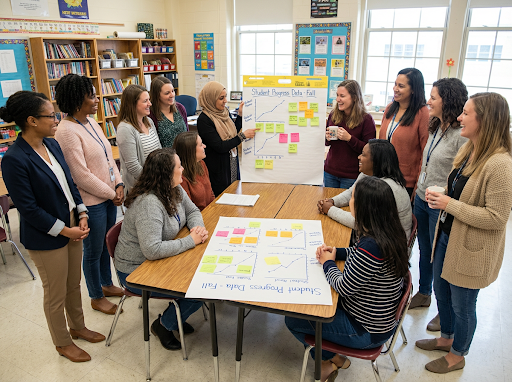
As we all know, strong or effective collaboration doesn’t happen by accident. And the same applies to working with data. Data collaborations are shaped by leadership decisions about what data to use, how it’s framed, and whose voices are centered.
When data conversations are done well, they can:
- Shift the focus from individual students to shared responsibility for all students,
- Help teams identify patterns across students as it relates to the curriculum instead of isolated quick-fixes in a particular lesson, and
- Build a culture of shared inquiry rather than feeling like we are being judged.
This is especially important in teacher professional learning communities, where the goal is not to analyze scores or student work just for the sake of it, but rather to improve our teaching practice together as a team serving our students. Administrators play a critical role in setting the tone—making it clear that data is a resource for learning, not a verdict on performance. Or said another way, data is one of many tools in our toolbox that we use teaching.
Start with Purpose, Not Spreadsheets
Before you prepare any chart, data table, or dashboard to share or review with your team, get clear your desired purpose of the conversation.
Ask yourself:
- What overall question are we trying to explore? What subset questions may we be interested in exploring to get at the overall question?
- What instructional decisions could we gain insights about from this data? What other data may we need to explore the overall or subset questions?
- How will this discussion support my teachers and students tomorrow? Next week? Next month?
Grounding data discussions for a clear purpose helps teams avoid getting lost in individual data values, and instead focus on broader meaning to identify insights and ideas. This approach aligns closely with data-driven collaboration practices that prioritize insight over volume.
Tip for leaders: Open meetings with a single framing question rather than multiple objectives. One strong question leads to deeper conversation.
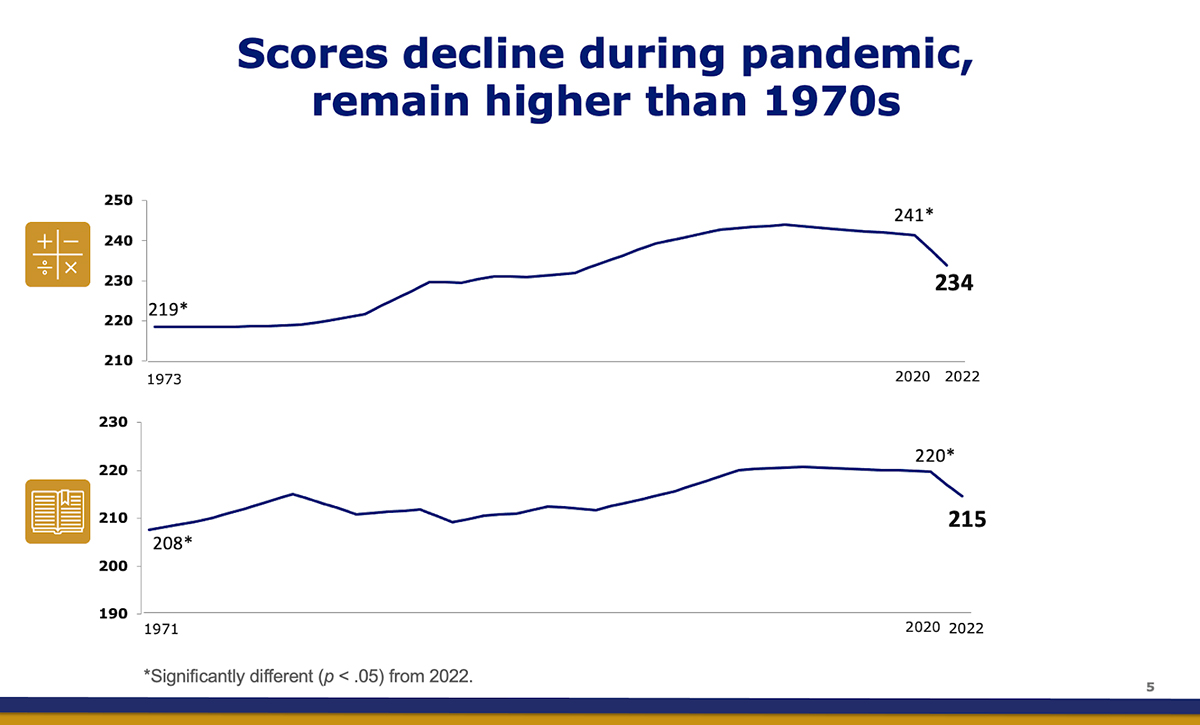
Source: https://www.the74million.org/article/nations-report-card-two-decades-of-growth-wiped-out-by-two-years-of-pandemic/
Create Structures That Invite Teacher Voice
Effective data collaboration and meaningful exploration requires more than time on the agenda—it requires intentional structures that support participation.
Consider using structures to the meeting that:
- Give teachers time to individually reflect before discussing,
- Encourage noticing patterns before jumping to solutions, and
- Normalize uncertainty and multiple interpretations of data.
By slowing the conversation down, administrators signal that thoughtful data-based sensemaking matters more than anecdotal quick fixes. This helps educators feel safer sharing observations and questions, especially when data reveals patterns that may be challenging to address as a team.
These practices strengthen educational leadership by reinforcing trust and collective ownership of student learning across the department, school or district (depending on what scale of data you are looking at).
Shift from “What Happened?” to “What Might This Mean?”
One common pitfall in data conversations is stopping at surface-level observations:
- Scores went up.
- Scores went down.
- One group outperformed another.
While these observations matter, this barely scratches the surface of what we can learn from our data. Also, these surface-level patterns are just that, as the surface. Instead when we deepen how teams engage with the data we can guide them towards larger or more meaningful interpretation.
Try prompts like:
- What overall patterns stand out across classrooms or grade levels?
- What might be contributing to this observed overall pattern? What could be related to it?
- What additional information would help us understand this better?
This shift helps teams move from reporting outcomes to learning from data together, a hallmark of strong PLC discussions based in data.
Use Data to Connect Instruction Across Classrooms
Data conversations are most powerful when they lead to shared instructional insight, not isolated action steps.
Administrators can support this by:
- Highlighting connections across subjects or grade levels
- Encouraging teams to share strategies that are working
- Framing next steps as experiments rather than mandates
When teachers see how data informs collective practice, collaboration becomes purposeful and energizing.
If you’re looking to deepen this work schoolwide, Dataspire’s In-School Trainings support leadership teams in building sustainable, inquiry-based data practices across departments.
👉 https://www.dataspire.org/in-school-trainings
Keep the Conversation Going Beyond the Meeting
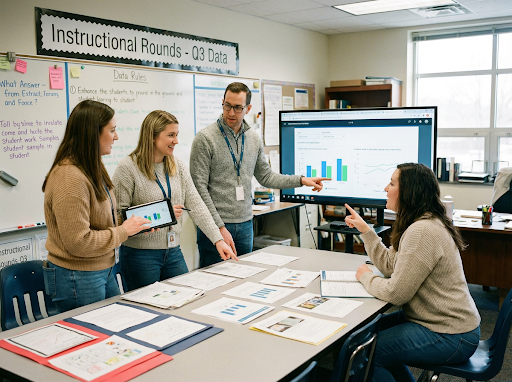
Data collaboration shouldn’t end when the meeting does. Leaders can extend the data-based explorations and discussions by:
- Sharing reflection questions after discussions
- Inviting teachers to try one small instructional shift
- Revisiting data with curiosity rather than judgment
This ongoing cycle reinforces that data use is part of professional learning—not a one-time event–and key to decision making at your site.
Continue the Learning
🎥 Watch the recorded Strategy Share-Out:
Fueling Collaboration with Data: Sparking Engagement Through Department Conversations
https://www.youtube.com/watch?v=b_VqrVVc2nw
💬 Ask Me Anything (AMA):
This session built directly on the ideas from the Strategy Share-Out and addressed leadership questions we received from those in the field. https://youtu.be/_0a-e1ccQPk?si=5CPb5BgrYsGyqZl1
Final Thoughts
When administrators lead data conversations with intention, empathy, and clarity, data collaboration becomes more than a meeting agenda item—it becomes a mindset. By focusing on purpose, voice, and shared sensemaking, school leaders can transform data into a powerful tool for instructional impact in supporting all students (and teachers).
